Ingredient transparency
What's in your Fiks
Formulations grounded in published UK government and institutional data, supported by our own customer research. Select your Fiks to see exactly what's in each daily sachet, the percentage of reference intake, and why we chose each ingredient.
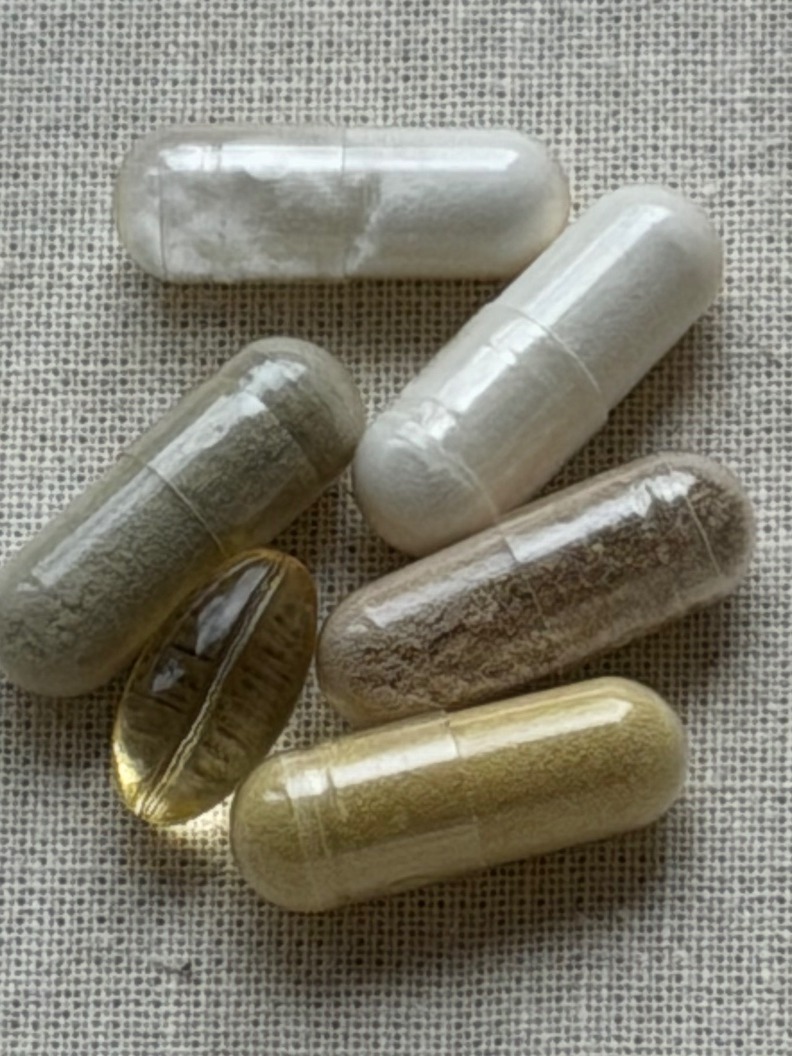
Every ingredient is a single capsule or softgel, no powders, no liquids, all sealed together in one daily sachet.
Vitamin D
18–31% of adults deficient; higher in Scotland
UK Reference Intake: 10mcg/day
Standard winter supplementation; essential at Scottish latitude
Folate
83% of women 16–49 below neural tube defect risk threshold
UK Reference Intake: 200mcg/day
Methylated form works where synthetic folic acid often fails
Iron
25.3% of women aged 20–59 below the Lower Reference Nutrient Intake (LRNI)
UK Reference Intake: 14.8mg/day
Absorbed roughly 2.5x better than ferrous sulphate; minimal gastrointestinal (GI) side effects
Magnesium
19% of women in their twenties below the LRNI
UK Reference Intake: 270mg/day
40–50% bioavailability vs ~4% for magnesium oxide
Selenium
50.3% of UK females below the LRNI
UK Reference Intake: 60mcg/day
Bioavailable organic form; conservative dose
Iodine
29% decline in urinary iodine in women of childbearing age, 2013–2023
UK Reference Intake: 140mcg/day
Falling dairy intake and rising plant-based diets are driving this decline
Data sources
Every dose on this page is checked against UK population data, government reference intakes, and European Food Safety Authority guidance.
Safety & compliance
Safe Upper Limits
No ingredient exceeds the Safe Upper Limit set by the Food Standards Agency (FSA) or European Food Safety Authority (EFSA)
Fat-soluble vitamins
Vitamin D and K2 sit within established safe daily intake ranges
Bioavailable forms
Selected to maximise absorption and minimise gastrointestinal (GI) side effects
CoQ10 and K2
Grounded in independent clinical literature
Omega-3 dosing
Aligned with cardiovascular and inflammatory disease prevention guidelines
No interactions
Nothing in your sachet conflicts with anything else in it, safe to take simultaneously
One sachet, one day
All dosages shown are per daily sachet, one sachet per day